Insect & Disease Control
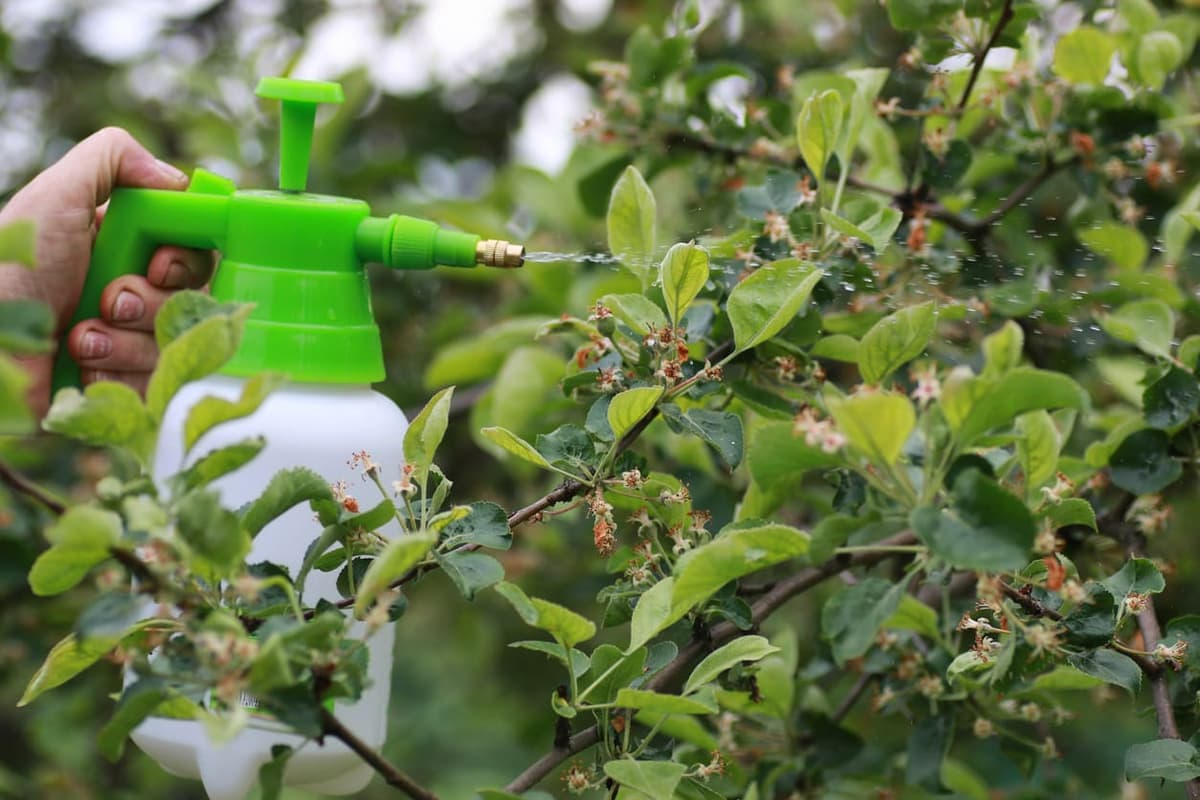
At Tree Care Enterprises, we offer expert insect and disease management services to protect your trees from harmful pests and infections.
Tree Insect & Disease Management in Rockford, IL and the Stateline Area
The tree canopy across Rockford, Winnebago County, and Walworth County has been under sustained pressure from invasive insects and disease for decades. Emerald Ash Borer alone has killed hundreds of thousands of ash trees across Northern Illinois and Southern Wisconsin since its arrival. Add Spongy Moth, Oak Wilt, Dutch Elm Disease, and a growing range of fungal threats, and proactive tree health management isn't optional for property owners who care about their landscape.
Tree Care Enterprises' ISA Certified Arborists diagnose tree health issues, develop treatment plans, and administer treatments using current best-practice protocols. We've been managing tree health in this region since 1978.
Emerald Ash Borer (EAB) Treatment and Management
Emerald Ash Borer is the most destructive invasive forest insect in North American history. In Winnebago County and Walworth County, it has eliminated the majority of the ash tree population. If you have an ash tree that has not been treated, there's a high probability it is already infested or will be within the next 1–2 seasons.
The good news: EAB is treatable, and treatment is far less expensive than removal. Systemic trunk injection with emamectin benzoate (Tree-Äge or similar) provides two to three years of protection per treatment and is effective even in trees with moderate to heavy infestation. Soil injection with imidacloprid (Merit) is appropriate for lightly infested or preventative treatment in lower-value trees.
Our arborists assess each ash tree's health, infestation level, and structural integrity to determine whether treatment is viable or whether removal is the more appropriate path. An ash that is more than 50% canopy-dead is generally not a treatment candidate.
Spongy Moth (Formerly Gypsy Moth) Control
Spongy Moth has been a recurring defoliation threat across Northern Illinois and Wisconsin. Heavy infestations can completely defoliate oak trees, and repeated defoliation kills them. Treatment with Btk (Bacillus thuringiensis var. kurstaki), a naturally occurring biological agent, is applied during the early larval stage in spring and is highly effective when timed correctly.
We monitor populations and time treatments appropriately — the window for effective Btk application is narrow, and missing it means waiting another year. Early detection through egg mass surveys in winter is part of our integrated pest management approach.
Oak Wilt
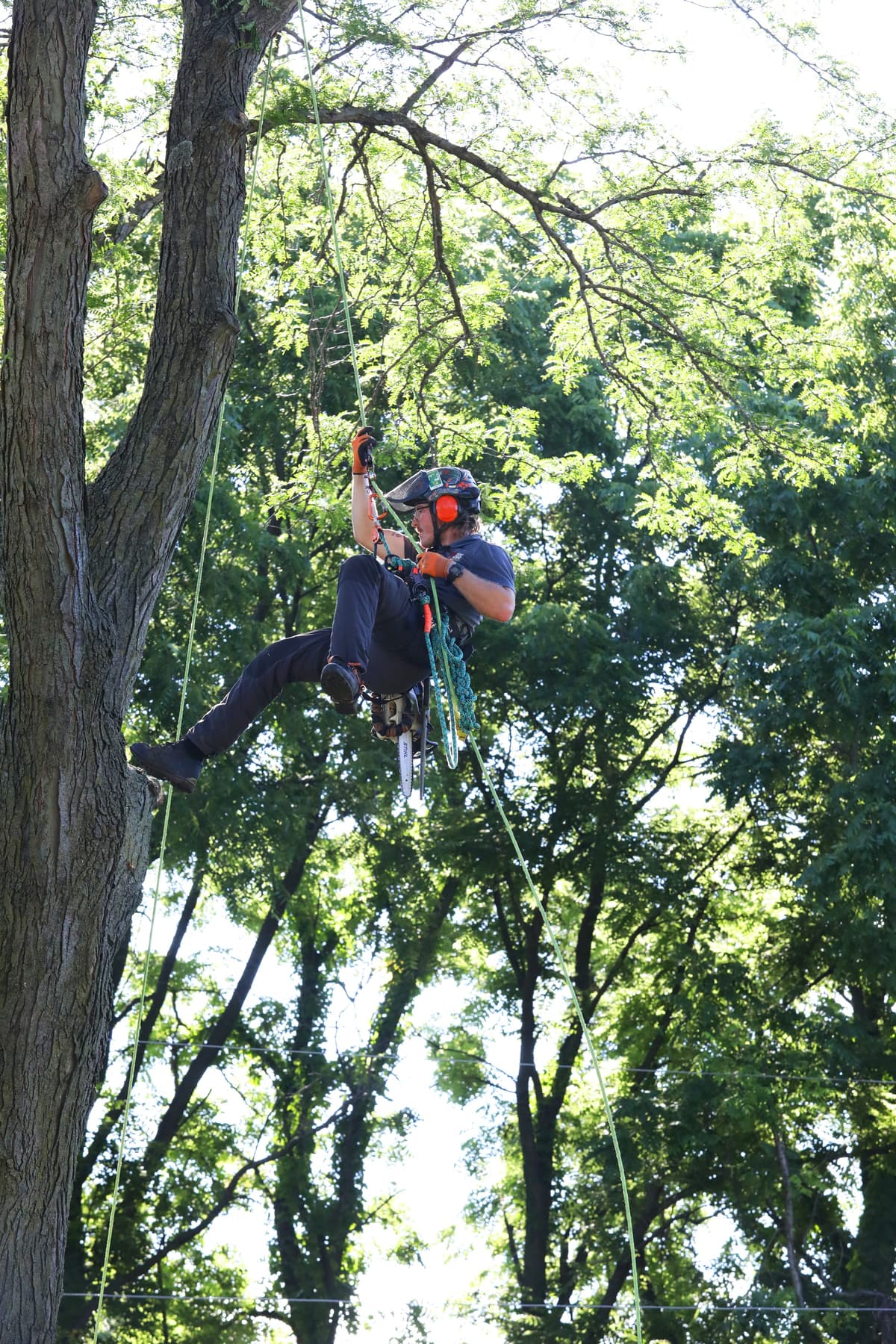
Oak Wilt is a fungal disease that kills red oaks quickly — sometimes within a single growing season. White oaks are more resistant but can also be affected. The disease spreads through root grafts between neighboring oaks and through sap-feeding beetles that carry the fungal spores to fresh wounds.
In the Stateline region, we see Oak Wilt in both the Rockford area and throughout Walworth County. Management includes proactive fungicide treatment (Propiconazole trunk injection), root graft disruption to stop underground spread, and prompt removal of infected trees to eliminate spore mats. Do not prune oaks between April and July — this is the highest-risk period for infection via wound exposure.
Dutch Elm Disease
Dutch Elm Disease (DED) has been present in Rockford since the 1960s and continues to cycle through American elm populations. Fungicide treatment (Arbotect/thiabendazole) can protect high-value elms for up to three years per application. For diseased trees with less than 30–40% crown infection, pruning the affected portions and applying fungicide can save the tree.
Fungal Diseases, Anthracnose, and Root Rot
Beyond the major invasives, our arborists regularly treat and manage anthracnose (sycamore, ash, oak), apple scab, fire blight, cytospora canker (spruce), Rhizosphaera needle cast (Colorado blue spruce), and Armillaria root rot. Many of these conditions can be managed through a combination of cultural practices, pruning, and targeted fungicide applications.
Deep-Root Injections and Soil Health
Trees growing in compacted urban soils — common throughout Rockford's older neighborhoods — often show chronic nutrient deficiency and reduced root function. Deep-root injections of fertilizer, mycorrhizal inoculants, and biostimulants directly into the root zone improve uptake and vitality in ways that surface fertilization can't match. This is often the most effective intervention for a tree that's "just not thriving" without a clear disease diagnosis.
ISA Certified Arborists. TCIA Accredited.
Our five ISA Certified Arborists — John Richards (IL-0027A), Doug Edwards (IL-0505A), Matt Richards (IL-9831A), Jeremy Montana (IL-4690A), and Pete Montana (IL-4689A) — diagnose and direct all plant health care work. We don't send a salesperson to up-sell treatments. We send an arborist to give you an honest assessment.
Tree Care Enterprises is TCIA-accredited and one of TCI Magazine's Top 20 Tree Care Companies nationally. Call 815-965-5757 to schedule a tree health consultation, or request a free estimate online.